
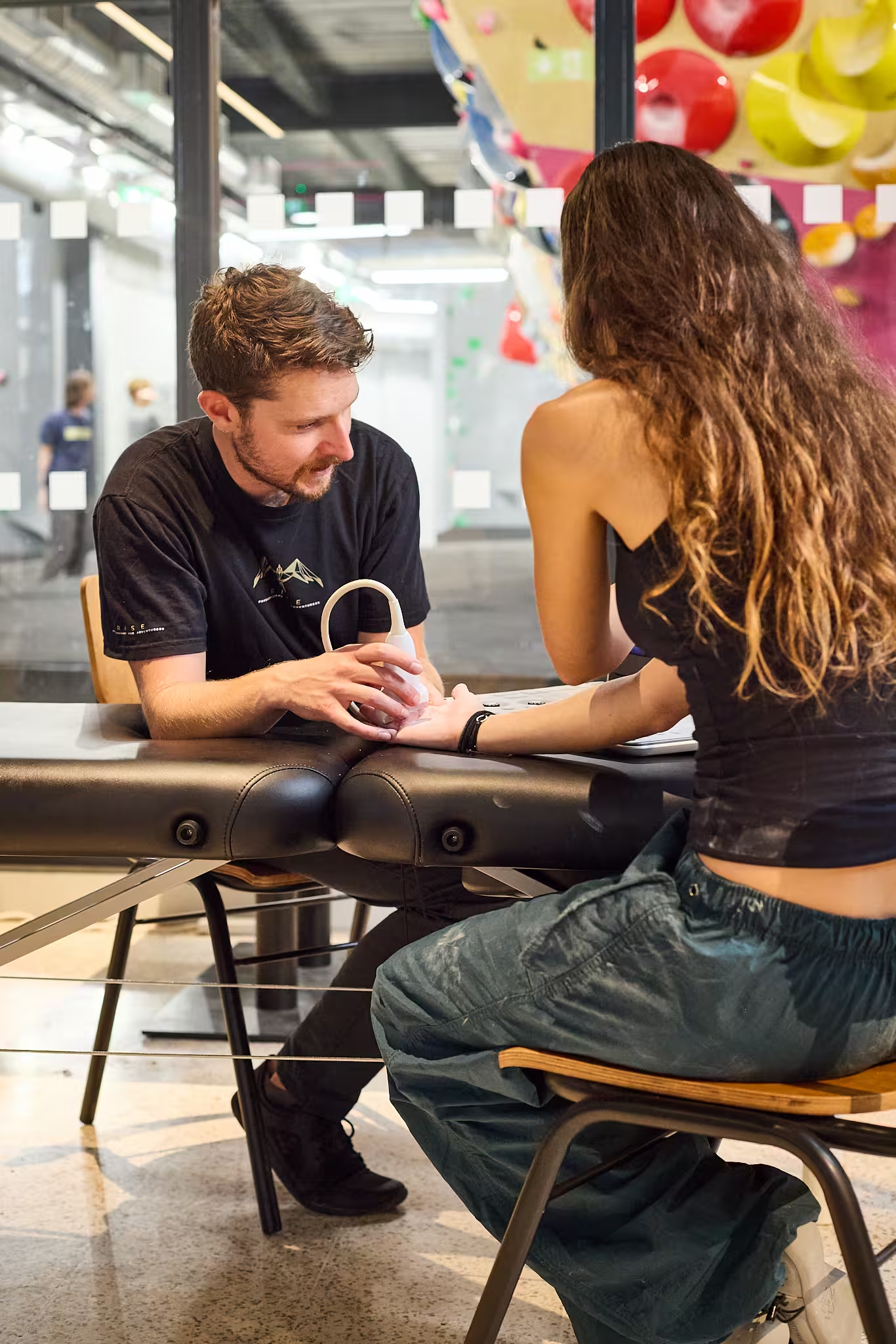
Climbing places unique demands on the body. High loads through the fingers, repetitive pulling, dynamic movement and complex body positions mean injuries are often specific, technical and misunderstood.
At Rise Physiotherapy, climbing is not a niche add-on, it is one of our core clinical specialisms. Our team includes climbers who understand the sport from the inside out, allowing us to assess injuries accurately, manage load intelligently and guide climbers back to performance with confidence.
We treat climbers across all disciplines bouldering, sport, trad and competition climbing from recreational climbers to those operating at elite and international level.
Finger Injuries
The most common climbing injury
Finger injuries account for a large proportion of climbing-related problems due to the extreme loads placed through small structures.
We commonly treat:
Our approach focuses on accurate diagnosis, load modification, structured return-to-grip strategies and progressive strengthening, rather than prolonged rest alone.
Pulley Injuries
Managing load without losing strength
Pulley injuries are common, particularly with crimping and dynamic movement. Poorly managed, they can become recurrent or career-limiting.
We assess:
Rehabilitation is individualised and progressive, often allowing continued climbing with intelligent modifications rather than full cessation.
Elbow Pain
Medial and lateral elbow overload
Elbow pain is common in climbers due to repetitive gripping, pulling and high forearm load.
This may include:
Treatment focuses on tendon loading, strength balance, grip management and shoulder contribution, rather than passive treatments alone.
Shoulder Injuries
Stability, strength and control
The shoulder is central to climbing performance and injury risk. Common presentations include:
We assess movement control, strength ratios and climbing-specific demands, building robust shoulders capable of tolerating dynamic and overhead loading.
Wrist And Hand Pain
Often overlooked, frequently limiting
Wrist and hand injuries can be subtle but significantly impact performance.
We commonly see:
Rehabilitation focuses on strength, control and load tolerance, with clear guidance on taping, grip selection and return to climbing.
Back Pain In Climbers
Rotation, tension and control
Climbers often present with:
These issues may be related to repetitive twisting, heel hooks, drop knees and core fatigue. Treatment addresses movement patterns, trunk control and climbing-specific strength rather than generic back exercises.
Knee Injuries
Drop knees, heel hooks and high steps
Knee pain in climbers often relates to:
We assess the whole lower limb and trunk, ensuring knee load is shared appropriately, reducing stress while maintaining movement confidence on the wall.
Ankle and Foot Injuries
Falls, slips and repeated stress
Climbers may experience:
Rehabilitation balances protection with progressive reloading, ensuring a confident return to dynamic movement and bouldering landings.
Overuse and Load-Related Injuries
When training outpaces recovery
Many climbing injuries develop gradually due to:
We help climbers understand why the injury developed, not just how to treat symptoms, supporting sustainable progression and long-term resilience.
Not Sure What’s Wrong?
You don’t need a diagnosis to book
Climbing injuries aren’t always clear-cut. Pain may be vague, inconsistent or appear only on certain moves.
Our role is to:
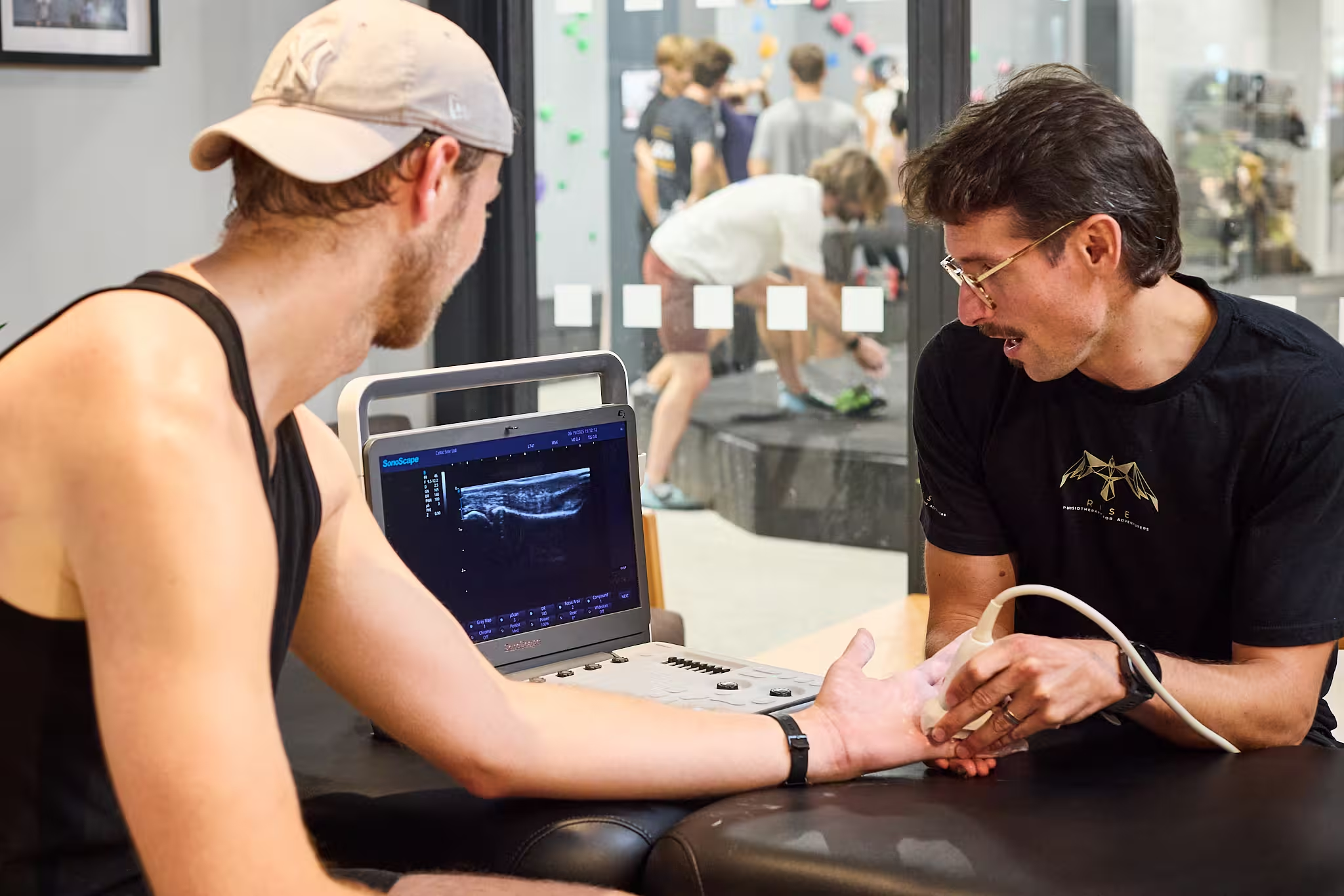
We're here for you
Get in touch
We use cookies to personalise content and analyse traffic. You can choose which cookies to allow. Privacy Policy • Cookie Policy • Terms & Conditions • Google Privacy
We use cookies to help you navigate efficiently and perform certain functions. You can choose which categories to allow below. Cookies categorised as Necessary are always active.
We also use third-party cookies for analytics and advertising. These are only stored with your consent. You can update or withdraw consent at any time via the cookie icon at the bottom-left. This site operates under UK GDPR, the Data Protection Act 2018, and the Privacy and Electronic Communications Regulations (PECR). Cookie Policy • Privacy Policy
Necessary cookies are required for core site features including security, network management, and consent storage.
| Cookie | Duration | Description |
|---|---|---|
hmdg_cookie_consent | 180 days | Stores your cookie consent preferences. |
PHPSESSID | Session | WordPress session identifier. |
wordpress_logged_in_* | Session | WordPress login authentication. |
Functional cookies enable enhanced features such as live chat and remembering preferences.
| Cookie | Duration | Description |
|---|---|---|
wp-settings-* | 1 year | Stores user interface preferences. |
Analytics cookies help us understand visitor behaviour. Controls analytics_storage for Google Analytics 4.
| Cookie | Duration | Description |
|---|---|---|
_ga | 2 years | Google Analytics — distinguishes users. |
_ga_* | 2 years | Google Analytics 4 — session persistence. |
_gid | 24 hours | Google Analytics — distinguishes users. |
_gat | 1 minute | Google Analytics — throttles request rate. |
Performance cookies collect aggregate, anonymous data about site performance.
| Cookie | Duration | Description |
|---|---|---|
_gat_gtag_* | 1 minute | Google Tag Manager — rate throttle. |
Marketing cookies track visits to deliver relevant ads. Controls ad_storage, ad_user_data, and ad_personalization.
| Cookie | Duration | Description |
|---|---|---|
_gcl_au | 90 days | Google Ads — conversion tracking. |
_gcl_aw | 90 days | Google Ads — click attribution. |
_gac_* | 90 days | Google Ads — campaign information. |
IDE | 1 year | Google DoubleClick — ad targeting. |
Powered by HMDG • Cookie Policy