Ultrasound, MRI & X-ray
Imaging can be a turning point in recovery. When used thoughtfully alongside clinical assessment and rehabilitation, imaging can help us pinpoint the real cause of pain, guide treatment choices, and speed up a safe return to activity.
We’ve seen great outcomes from timely and appropriate imaging. From climbers who have point-of-care ultrasound that enables an ultrasound-guided injection and a rapid return to training, to runners whose MRI revealed the exact injury allowing a focused rehab plan. When used as part of a good assessment, it can help guide the direction of travel.
Point-of-care Ultrasound - on-site
Real-time, specialist scans for soft-tissue problems
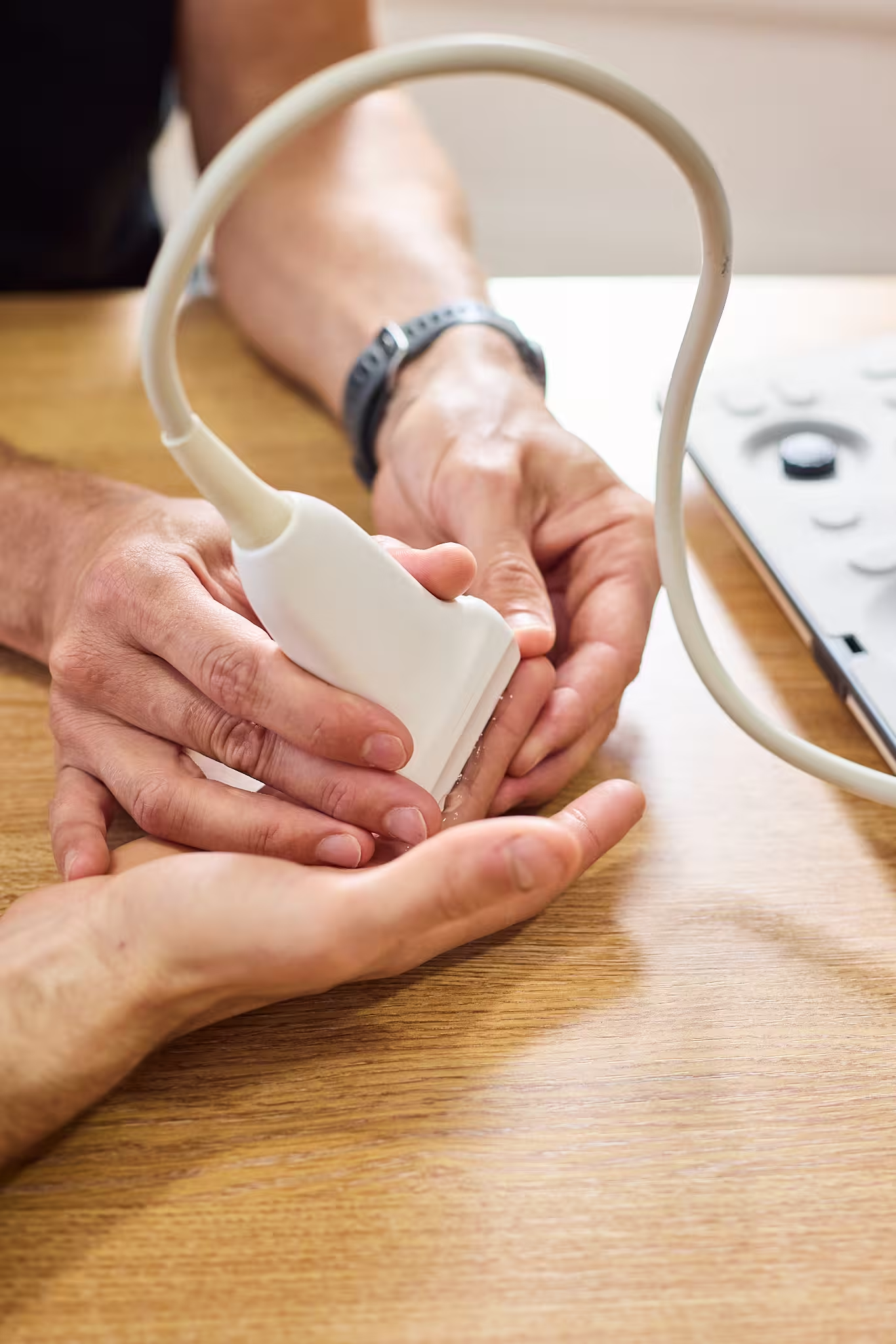
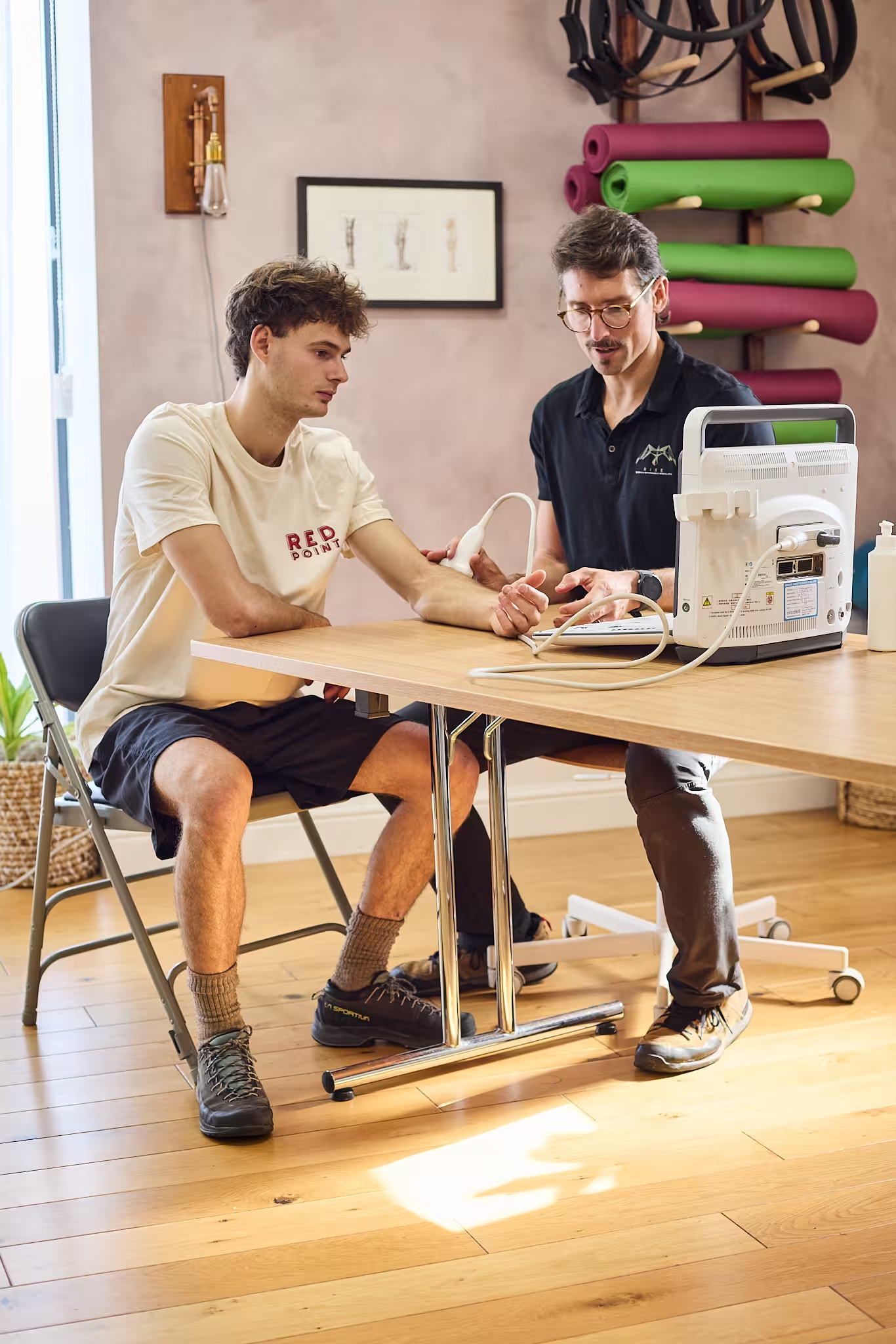
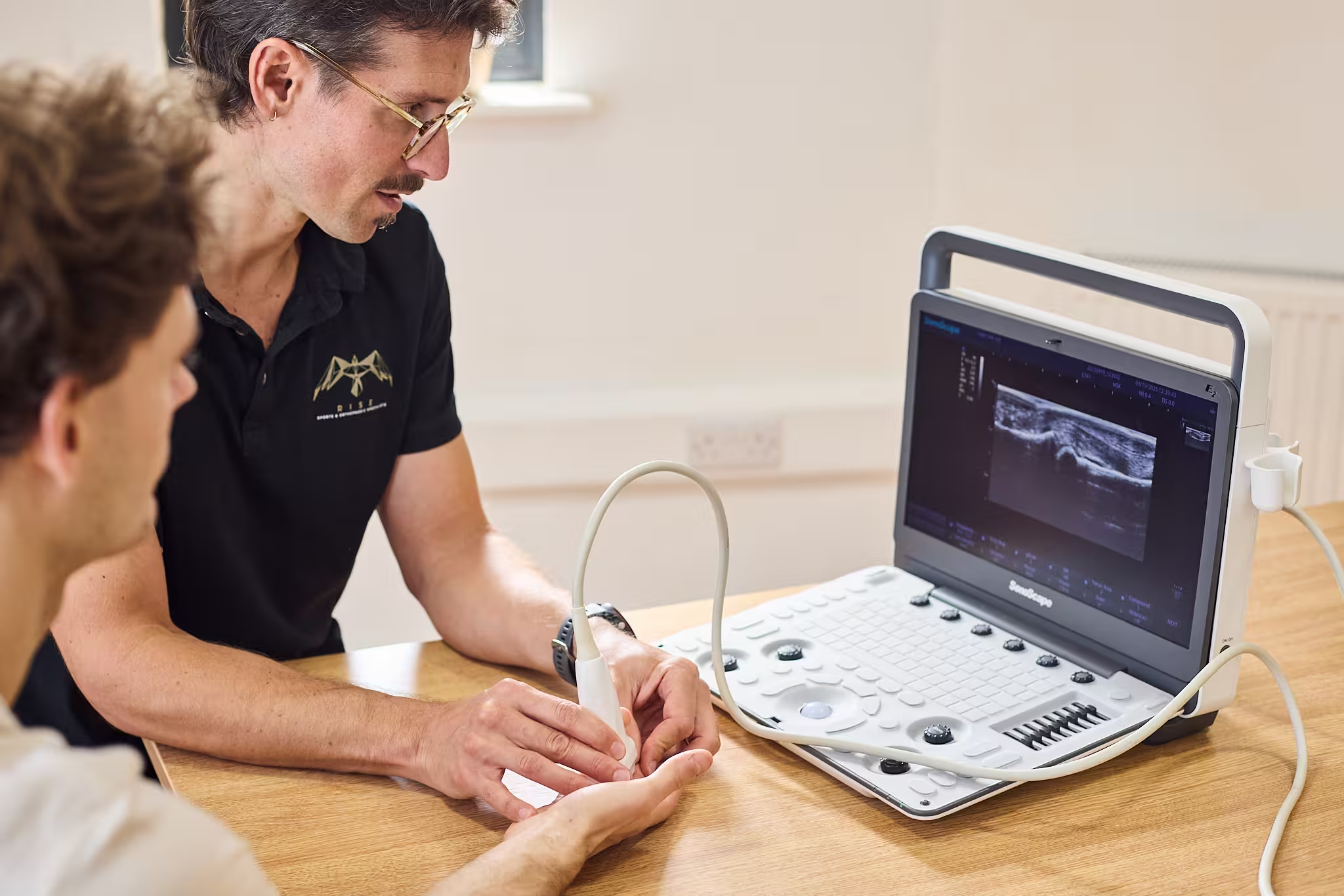
Our specialists perform on-site, point-of-care ultrasound scans specifically for musculoskeletal conditions. Ultrasound is a dynamic, real-time test, and uses a soundwave to allow us to view tendons, ligaments, muscles, bursae and nerves with no risk of side-effects.
- Delivered by our specialist clinicians, on site.
- Results are reviewed by the clinician immediately and integrated straight into your rehabilitation plan.
- Ultrasound is radiation-free, quick, and ideal for soft-tissue injuries.
- You must have completed an initial assessment first – this helps us decide whether an ultrasound is appropriate. If it is, we will arrange the scan in a separate appointment.
“After an assessment, we arranged a same-week ultrasound that showed a patellar tendinopathy. Because we could see the problem we targeted the rehab plan and the progress was rapid”
MRI (Magnetic Resonance Imaging)
Best for deep structures and complex cases
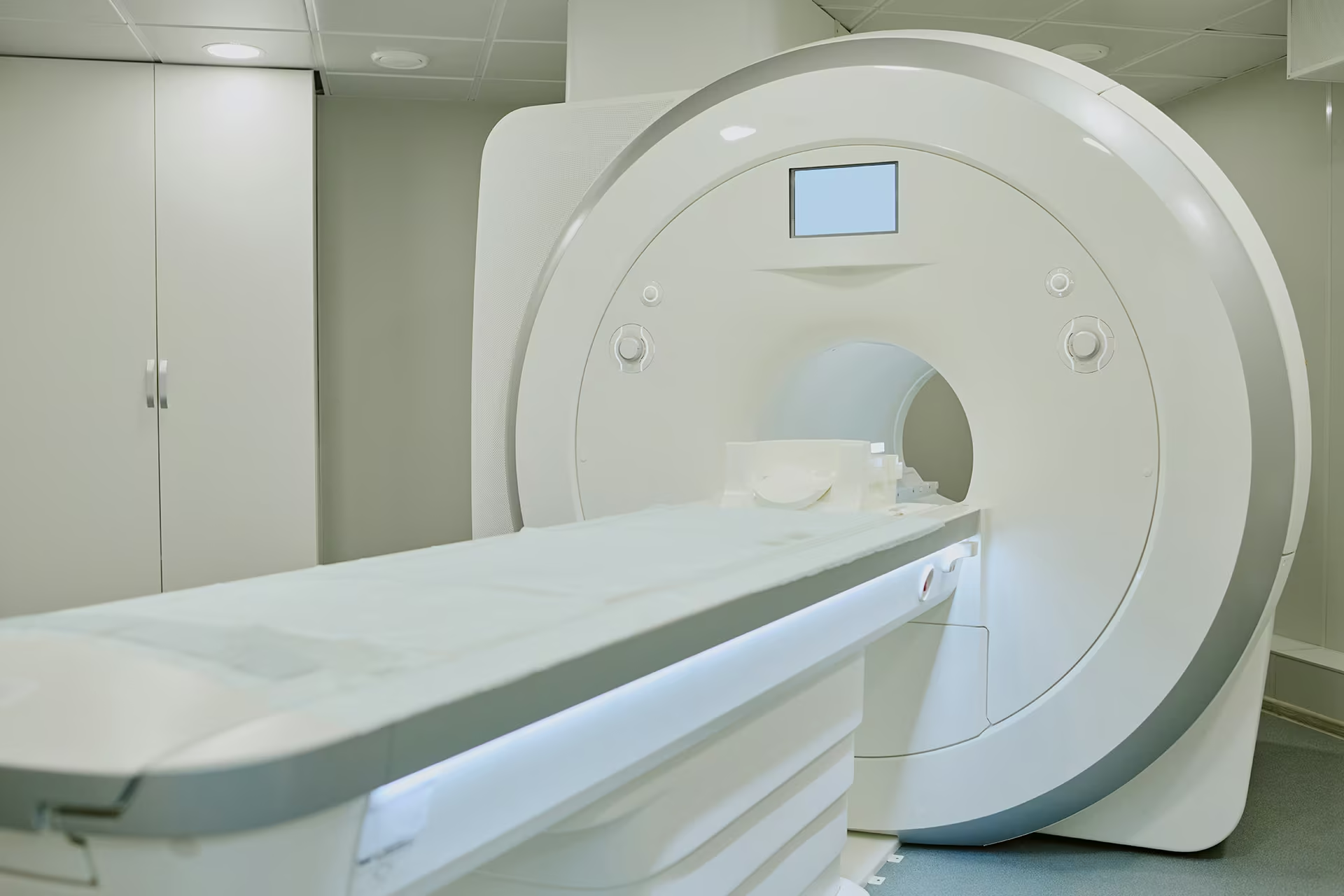
MRI provides high-resolution images of internal structures – bone, cartilage, deep ligaments, complex tendon injuries and bone stress reactions that aren’t visible on X-ray or ultrasound. It’s the best choice when we suspect a structural problem that will change management (for example, a suspected ligament tear, bone stress injury, or complex pathology).
- MRI is performed at a dedicated imaging centre and requires referral.
- We will advise whether an MRI is likely to change your treatment after your initial assessment.
- MRIs produce a formal radiology report and images; our team will review the report with you and adapt your treatment plan and rehab accordingly.
X-ray
Quick check for bone, alignment and arthritis
X-rays are the first-line test for suspected fractures, dislocations, bony alignment issues and osteoarthritis. They have limited use for soft-tissue problems (tendons, ligaments) but are fast, widely available and useful when bony change needs clarifying.
- Good for fractures, joint space narrowing, and bony alignment.
- Not useful for isolated soft-tissue pain – in those cases ultrasound or MRI is preferred.
- Often the quickest way to rule in/out bone injury before further imaging.
- Deliver a dose of radiation, so have some restriction and risk of side-effects.
How we decide which scan you need
- Book an initial assessment – this is essential. We take a detailed history and perform a clinical exam to determine whether imaging will change your management.
- If ultrasound is appropriate, we arrange a separate point-of-care ultrasound appointment with one of our specialists.
- If MRI or X-ray is indicated, we will explain the reasons, refer you to the right imaging pathway, and plan follow-up to review results and adapt your rehabilitation.
What to expect after a scan
- For on-site ultrasound: immediate discussion of findings and practical changes to your rehab plan. A written summary is also added to your record. You may be asked to arrange a review with the clinician you first saw, or a more appropriate clinician, to continue rehab.
- For MRI/X-ray: we’ll receive a radiology report which we will review with you and translate the findings into specific, goal-focused steps for recovery.
- Imaging is just one piece of the puzzle. We combine scan results with hands-on assessment and an exercise-led plan designed around your goals.
When imaging helps most
- Persistent pain despite guided conservative treatment.
- Acute injury with suspected structural damage (fracture, ligament tear, cartilage injury).
- When the diagnosis is unclear from the clinical exam alone.
- To guide procedures or injections precisely.
Ready to proceed?
If you think imaging might help, start by booking an initial assessment with one of our specialists. We’ll take the time to understand your story, explain the imaging options, and, if appropriate, arrange the necessary imaging pathway organise an on-site ultrasound or the necessary referral for MRI/X-ray, then turn the results into a practical plan so you can get back to what matters.
— Want us to review a previous scan? Bring the images/reports to your assessment and we’ll discuss how they fit with your current symptoms and goals.